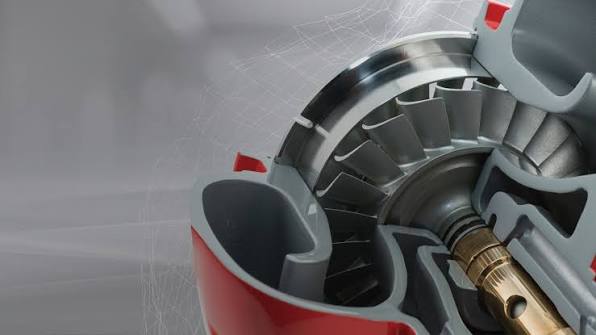
Dust hangs over the job site as an excavator stalls mid-lift. The operator checks the diagnostics: turbocharger failure. Hours of work halt while crews wait for a replacement part. This scenario repeats daily across construction projects worldwide.
Inconsistent manufacturing causes these unpredictable breakdowns. When engineering machinery turbochargers leave factories without uniform precision, their performance suffers under real-world loads. Only rigorous manufacturing standards ensure reliability in high-performance applications.
Precision in turbocharger design directly impacts engine performance, efficiency, and durability. A high-quality turbocharger from a certified engineering turbocharger factory delivers consistent quality. Kaidi's engineering machinery turbochargers exemplify this commitment. Their enhanced bearing systems resist extreme vibration, maintaining engine performance through demanding cycles. Without such quality, operators face costly downtime, shortened lifespan, and safety risks—pain points no construction manager can afford. Consistency transforms abstract engineering concepts into tangible operational reliability.
How Inconsistent Manufacturing Affects Engine Performance
Inconsistent turbocharger manufacturing disrupts the balance between air and fuel delivery in an engine. For engineering machinery turbochargers, minor blade geometry variations degrade responsiveness. These deviations create performance gaps that operators experience during demanding engine work.
The Impact of Blade Geometry and Clearance Variations
Turbocharger blades must maintain precise geometry to compress intake air effectively. Manufacturing inconsistencies alter blade angles and surface finishes. These changes reduce compressor efficiency and disrupt the air-fuel ratio. An unbalanced tire provides a useful analogy. The tire vibrates at speed and wears unevenly. Similarly, inconsistent blade geometry creates airflow disturbances that lower turbocharger efficiency. The result is incomplete combustion and wasted fuel.
Clearance tolerances between the compressor wheel and housing determine performance. Industry specifications require a running clearance of 0.009 to 0.012 inch for heavy-duty applications. Excess clearance allows compressed air to leak past the blades. This leakage reduces boost pressure and increases turbo lag. Insufficient clearance risks part contact and catastrophic failure. Consistent manufacturing ensures every unit meets this narrow window. A high-quality turbocharger from a certified engineering turbocharger factory guarantees these specifications. Engineering machinery turbocharger certification standards verify clearance accuracy.
For construction equipment, instant power response matters during digging or lifting. Kaidi's turbocharger design focuses on rapid pressure response to handle load surges without performance loss.
The Consequences of Rotor Imbalance on Boost Control
The rotating assembly spins at extremely high speeds. Minor imbalance creates vibrations that degrade performance. Rotor imbalance leads to inconsistent boost pressure delivery. The engine control system cannot maintain the correct air-fuel ratio. Combustion becomes unstable and efficiency drops. An unbalanced unit cannot deliver reliable pressure for the engine.
Research on variable geometry turbochargers shows benefits of precise control. These units achieve a 2 to 7 percent improvement in part-load fuel consumption. Full-load performance improves by up to 15 percent. These gains come from maintaining optimal boost across the entire range. At low speeds, precise vane positioning enables faster spool-up. This action raises the air-fuel ratio without lag. At high speeds, vanes open to maximize airflow. Rotor imbalance disrupts this balance. Each unit must maintain consistent geometry to match these performance targets.
Peak turbine efficiency occurs at about 60 percent nozzle opening. Efficiency drops quickly when vanes move from this mid-position. Manufacturing consistency ensures each unit operates near this optimal point. The durability of the rotating assembly depends on precision balance. A high-quality turbocharger from a reputable manufacturer delivers reliable engine performance. Kaidi maintains rigorous quality control throughout production. Kaidi turbocharger units use advanced processes to achieve balance. The result is stable performance across all conditions for high-performance applications.
The Link Between Manufacturing and Premature Turbocharger Failure

Construction sites expose equipment to extreme vibration, high temperatures, and heavy mechanical impacts. These harsh conditions demand ultra-durable materials in every component. Manufacturing variations in material composition and heat treatment create hidden weak points that accelerate fatigue and lead to premature turbocharger failure.
How Material and Heat Treatment Variations Accelerate Fatigue
Material quality determines how well a turbocharger withstands thermal cycling and mechanical stress. Inconsistent heat treatment during production can leave some units with softer or more brittle regions than others. These weak points develop microscopic cracks under repeated heating and cooling cycles. Over time, these cracks propagate through the turbine housing or wheel, eventually causing catastrophic failure.
High-strength alloy materials resist this fatigue process effectively. Kaidi engineering machinery turbochargers use premium alloys selected specifically for their ability to maintain structural integrity under extreme thermal loads. The heat treatment process follows strict protocols to ensure every unit achieves the same metallurgical properties. This consistency in material processing directly translates to predictable durability in the field.
Engineering machinery turbocharger certification standards require documented material traceability and heat treatment verification. A reputable engineering turbocharger factory maintains these records for every production batch. This documentation provides confidence that each unit leaving the facility meets the same durability specifications.
The Role of Assembly Tolerances in Bearing and Seal Wear
Assembly tolerances control how precisely components fit together. Loose tolerances in bearing clearances allow excessive shaft movement during operation. This movement causes uneven wear patterns on bearing surfaces and accelerates degradation. Tight assembly tolerances prevent this premature wear and extend the service life of the rotating assembly.
Seal clearance represents another critical tolerance zone. Excessive clearance in turbocharger seals allows oil to migrate from the center section into the turbine or compressor housings. This oil migration produces visible smoke and reduces lubrication effectiveness. The escaping oil contaminates the intake and exhaust systems, accelerating wear on turbo components and shortening component life.
Worn seals allow oil to bypass into intake or exhaust pathways. This oil enters the combustion chamber, producing blue or gray exhaust smoke and causing excessive oil consumption. Oil traveling through the intercooler deposits inside piping, reducing airflow and clogging sensors and valves. These deposits can cause low-oil damage to other engine components, ultimately reducing overall component life.
Small turbo problems such as excessive seal clearance escalate quickly. What begins as a relatively minor seal replacement can progress into a catastrophic rebuild costing tens of thousands of dollars. Kaidi addresses this risk through enhanced bearing systems and precision assembly processes. Their manufacturing approach maintains tight tolerances that prevent seal wear and oil contamination from developing in the first place. This commitment to quality ensures consistent performance and durability across every unit produced.
The True Cost of Inconsistent Manufacturing
Unplanned Downtime and Lost Productivity in the Field
A single excavator failure on a construction site stops more than one machine. Crews stand idle, waiting for diagnosis and repair. The hourly cost of an idle excavator with an operator runs between $100 and $150. Add the wages of supporting workers, and the figure climbs quickly. A full day of downtime can easily exceed $2,000 in direct labor costs alone. Project schedules slip, and penalties for late completion accumulate. These expenses appear on no invoice from the turbocharger supplier, yet they drain project budgets just the same.
A reliable turbocharger carries a higher upfront price. That price difference often amounts to a few hundred dollars per unit. Compare that figure against one day of lost productivity. The math favors quality immediately. A single avoided failure pays for the premium many times over. Procurement specialists who focus only on initial purchase price miss this larger calculation. The true measure of value lies in total cost of ownership, not the sticker price.
Equipment owners who choose engineering machinery turbochargers from a certified engineering turbocharger factory gain protection against these losses. Certification verifies that each unit meets documented standards for materials and assembly. This verification translates directly into predictable field performance. Operators can trust the machine to work when the schedule demands it.
The Financial Burden of Warranty Claims and Replacement Parts
Warranty claims create hidden costs that extend far beyond the replacement part itself. Processing a claim requires administrative time, shipping expenses, and installation labor. The failed component must be removed, packaged, and returned for analysis. Each step consumes resources that could serve productive work elsewhere. Frequent failures also strain relationships with equipment dealers and manufacturers. A pattern of repeated claims signals poor component quality and erodes confidence in the entire supply chain.
Replacement parts carry their own financial weight. A turbocharger for heavy construction equipment typically costs between $1,500 and $4,000. When failures occur repeatedly, these costs multiply across a fleet. A fleet of twenty machines experiencing one failure each per year faces $30,000 to $80,000 in annual replacement expenses. This figure excludes the downtime costs already discussed. The combined burden can reach six figures annually for larger operations.
Kaidi addresses these hidden costs through rigorous durability validation. Every engineering machinery turbocharger undergoes testing that simulates real-world operating conditions before shipment. This process catches defects at the factory rather than on the job site. The result is a lower total cost of ownership for equipment owners. Fewer failures mean fewer warranty claims, fewer replacement purchases, and less administrative overhead.
Quality manufacturing also protects brand reputation. Equipment owners talk to each other about component reliability. A pattern of premature failures damages a manufacturer's standing in the market. Conversely, consistent performance builds trust and repeat business. The engineering turbocharger factory that invests in precision manufacturing earns a reputation for durability that becomes a competitive advantage. This reputation translates into customer loyalty and stable demand for years to come.
When Small Defects Create Major Turbocharger Safety Hazards
Manufacturing inconsistencies create dangers that extend far beyond performance losses or financial setbacks. A turbocharger spins at speeds exceeding 100,000 revolutions per minute during heavy equipment operation. At these velocities, even microscopic defects transform into life-threatening hazards. Construction sites place workers in close proximity to machinery. A catastrophic turbocharger failure endangers everyone within range.
The Danger of Overspeed Events and Turbine Wheel Fracture
Rotor imbalance represents the primary trigger for overspeed events. When manufacturing inconsistencies leave one blade slightly heavier than another, the shaft wobbles during rotation. This wobble prevents the wastegate or variable geometry system from maintaining proper boost pressure. The turbocharger accelerates beyond its designed limits. Turbine wheel stress increases exponentially with rotational speed. A wheel designed for 120,000 RPM experiences four times the stress at 240,000 RPM. This stress exceeds the material's yield strength. The turbine wheel fractures into high-velocity fragments.
These fragments penetrate the turbocharger housing and strike surrounding components. Hot exhaust gases escape through the breach. Operators face risks of severe burns from escaping gases. Nearby personnel face projectile hazards from housing fragments. The engine loses boost pressure suddenly, causing uncontrolled combustion conditions. Engineering machinery turbocharger certification requires overspeed testing to verify wheel integrity. A certified engineering turbocharger factory conducts these tests on every production batch. Units that pass certification demonstrate the material quality and balance precision necessary for safe operation.
Bearing Seizure and the Risk of Secondary Engine Damage
Bearing systems depend on precise oil clearances for proper lubrication. Manufacturing variations in bearing housing dimensions alter these clearances. Insufficient clearance restricts oil flow. The bearing surface loses its lubricating film during high-speed operation. Metal-to-metal contact generates intense friction heat. Temperatures rise rapidly, causing the bearing to weld itself to the shaft. This condition is bearing seizure.
A seized bearing stops the turbocharger rotor instantly. The engine continues forcing exhaust gases against the locked turbine wheel. Pressure builds in the exhaust manifold. Oil supply to the center housing continues, flooding the seized bearing area. The combination of heat and pressure causes the turbocharger to fail catastrophically. Metal fragments from the bearing and shaft enter the engine's intake system. These fragments score cylinder walls, damage piston rings, and destroy valve seats. The engine suffers complete mechanical failure.
Secondary engine damage multiplies repair costs dramatically. A turbocharger replacement costs thousands of dollars. A complete engine rebuild costs tens of thousands. The difference represents the true cost of inconsistent manufacturing. These risks remain unacceptable in any industrial setting. Equipment operators deserve protection from failures that threaten their safety and their livelihoods. Kaidi engineering machinery turbochargers undergo rigorous testing to prevent these failure modes. Enhanced bearing systems maintain proper clearances under extreme conditions. High-strength alloy materials resist thermal and mechanical stress. This commitment to quality ensures that every unit delivers safe, reliable performance throughout its service life. The durability of these components provides peace of mind for operators and project managers alike. Consistent manufacturing transforms a simple component into a guarantee of operational safety.
How Precision Turbocharger Manufacturing Ensures Consistency

Achieving reliability in any turbocharger requires deliberate investment in advanced technologies and rigorous quality control systems. Precision machining shapes turbocharger components to microscopic tolerances. Statistical monitoring catches deviation before it reaches the customer. Together, these approaches transform the concept of unwavering consistency into a measurable reality for each unit produced.
The Role of CNC Machining and 100% Inspection
Modern CNC machining delivers the precision that a high-quality turbocharger demands. Five-axis simultaneous CNC machines shape compressor wheels with twisted blade geometries to an accuracy of ±0.005 millimeters, or ±5 microns. This level of precision ensures that every blade angle and surface finish matches the turbocharger design exactly. The result is consistent airflow and predictable boost performance across every turbocharger.
Five-axis machining offers advantages for turbocharger production. The machine handles complex, twisted blade shapes in a single setup. This eliminates misalignment errors that occur when repositioning a part. Fewer setups reduce production time and improve surface finish. The tool maintains optimal cutting angles throughout the process, producing smoother blade surfaces critical for aerodynamic efficiency. These machines handle high-performance materials such as titanium and nickel alloys, common in precision turbo parts.
Precision machining alone does not guarantee a flawless product. Every component must pass inspection before assembly. The manufacturer mandates 100% full inspection for every single product. This process covers rotor balancing, intricate parts inspection, and high-speed balancing of the complete core assembly. Quality control follows a "Total Quality Control" philosophy where every technician acts as an inspector from the first machining process to the final product.
The manufacturer explicitly states: "No Random Checks—100% Fully Inspected Before Shipping." Every turbocharger must undergo a fully implemented testing process and pass a 100% qualification test before leaving the factory.
This commitment to inspection reduces failure rates significantly. The engineering turbocharger factory that combines advanced CNC machining with comprehensive testing delivers a high-quality turbocharger that performs reliably and offers lasting durability in demanding conditions. Engineering machinery turbocharger certification verifies these manufacturing processes and ensures adherence to exacting standards.
Using Statistical Process Control to Maintain Uniformity
Manufacturing consistency requires more than inspecting finished products. Statistical Process Control (SPC) monitors production in real time. Technicians measure key parameters at each stage and plot them on control charts. When a measurement drifts toward the tolerance limit, operators adjust the process before it produces defective parts. This proactive approach prevents variations from reaching the customer.
SPC provides a systematic method for maintaining uniformity across thousands of units. Every machine, operator, and shift produces components within the same controlled window. This consistency translates directly into predictable field performance. Equipment owners can trust that the turbocharger installed today will perform the same as the unit installed last year. This uniformity allows the engine to maintain optimal performance and combustion conditions under varying loads.
Kaidi's commitment to OEM-level solutions includes advanced manufacturing and precision testing to ensure every turbocharger meets the same high standard. This integration of CNC precision, 100% inspection, and statistical process control creates a production system that delivers quality consistently. The result is a turbocharger that delivers reliable performance across the full range of high-performance applications, from excavators to wheel loaders. The engine benefits from this consistency through stable power delivery and improved fuel efficiency. Operators experience greater durability from components that face fewer stress variations during operation.
Manufacturing consistency represents a necessity for any turbocharger component. Inconsistent production creates reduced performance, premature failure, high costs, and safety risks. These outcomes prove unacceptable in any setting. These failures disrupt schedules and damage reputations. These issues plague operations daily. Choosing a precision-focused manufacturer delivers higher uptime and lower total cost of ownership. This approach saves money over the long term. A high-quality turbocharger provides reliable performance and lasting durability for high-performance applications. A high-quality turbocharger also protects engine efficiency. Certification ensures compliance with exacting standards. Procurement specialists and maintenance managers must evaluate supplier manufacturing processes. They must prioritize consistency for their heavy-duty equipment. Reliability determines fleet efficiency. Investing in quality means investing in productivity and safety. This investment guarantees peace of mind for all stakeholders.



 Login
Login