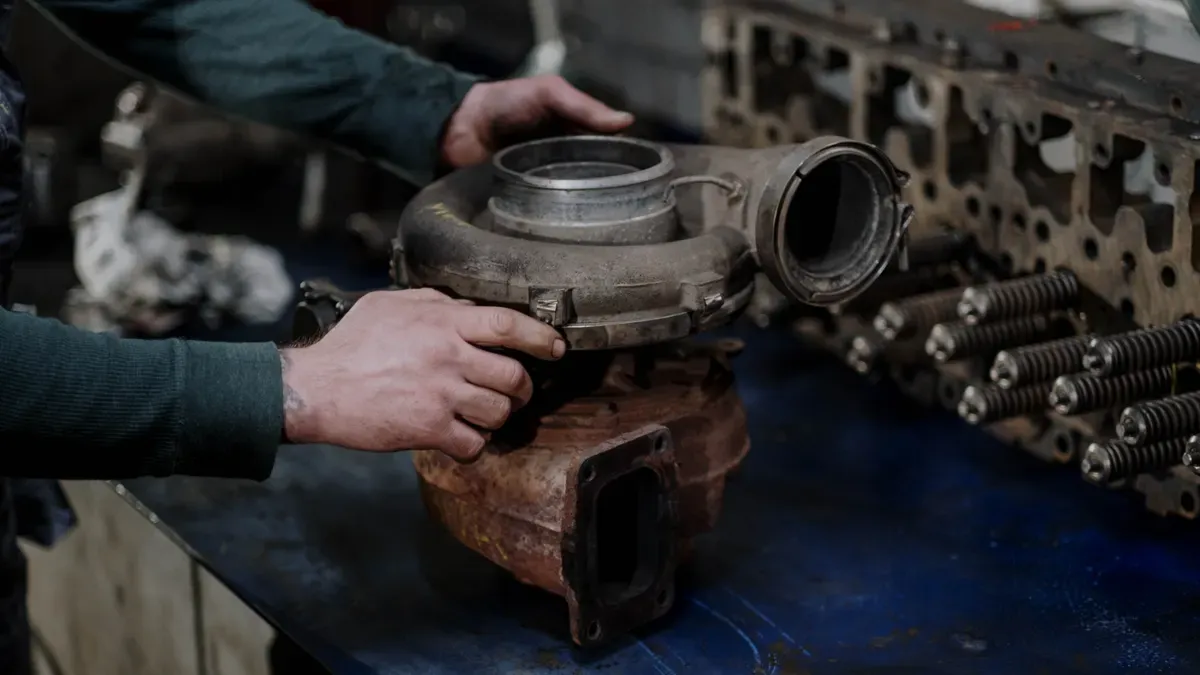
A driver presses the accelerator on a steep, muddy climb. The engine needs instant torque to maintain momentum. A turbocharger, an air compressor powered by exhaust gas, delivers that power. Standard turbos often lag in these rough conditions, failing to provide immediate response. Modern solutions, such as variable geometry turbochargers and electronic boost control, address this delay. These systems anticipate load changes and adjust airflow quickly. However, intense heat threatens turbo reliability. Automotive Electric Water Pumps manage coolant flow after shutdown, protecting critical bearings. This supporting role proves essential for consistent performance in extreme terrain.
The Unique Demands of Off-Road Turbocharging
Off-road driving creates conditions that street driving never approaches. A vehicle climbing a rocky incline faces sudden resistance from loose gravel. The same engine that just crawled through deep mud must suddenly accelerate onto a hard-packed ridge. These rapid load shifts demand immediate turbocharger response. The turbo must spool up quickly to deliver boost precisely when the driver needs it. Any delay means lost momentum, and on a steep slope, lost momentum can stop the vehicle entirely.
Rapid Load Changes and the Need for Quick Spool
Sand, mud, and rocks each create different resistance levels. A turbocharger that performs well on pavement may struggle when wheels dig into soft terrain. The engine speed drops suddenly, exhaust flow decreases, and the turbo loses boost pressure. When the driver demands power again, the turbo must rebuild that pressure almost instantly. Engineers have developed several solutions to shorten this spool-up time. Lighter turbine wheels reduce rotational inertia, allowing faster acceleration of the turbo shaft. Advanced bearing systems lower friction, letting the assembly spin up more freely.
Safran's LEAP engine family, using ceramic matrix composites with 15% lower thermal inertia and lightweight titanium aluminide blades, achieves spool-up time reductions of 20-25% in commercial applications.
These same principles apply to off-road turbochargers. Reduced thermal mass means components reach operating temperature faster. Lighter materials respond more quickly to changing exhaust flow. The result is boost that arrives when the terrain demands it, not a moment later.
Advancement | Reported Spool-Up Reduction |
Ceramic ball bearings (Si3N4/ZrO2) | 15-20% (lab testing) |
Titanium aluminide (TiAl) turbine wheels | Up to 30% (field tests) |
DLC surface coatings | Friction reduced by up to 80% (indirectly supports faster spool-up) |
Vibration, Heat, and Dust Resistance Requirements
Off-road environments punish equipment relentlessly. Rough trails transmit constant vibration through the chassis. The turbocharger must withstand this shaking without loosening connections or developing cracks. Reinforced housings provide the structural strength needed for these conditions. High-temperature alloys resist the intense heat generated during sustained hard operation. Dust seals protect internal components from fine particles that would otherwise wear down precision surfaces.
The turbocharger operates in an environment far harsher than a paved road. Engine bay temperatures climb higher during slow, high-load off-road crawling. Air filters capture larger debris, but fine dust still enters the engine compartment. Seals and bearings must resist contamination while maintaining their function. A turbocharger built for off-road use incorporates these protective features as standard equipment, not as optional upgrades. This robust construction ensures reliable operation across thousands of miles of challenging terrain.
Key Technologies for Reducing Turbo Lag in Rugged Conditions

Engineers have developed several approaches to eliminate turbo lag in demanding off-road environments. These technologies work together to deliver boost pressure precisely when the driver needs it. Each system addresses a different aspect of the lag problem. Variable geometry turbochargers change the airflow path itself. Electronic wastegate controls anticipate load changes before they occur. Together, these innovations transform the turbocharger from a passive component into an active participant in vehicle performance.
Variable Geometry Turbochargers (VGT) and Instant Boost
A variable geometry turbocharger uses adjustable vanes positioned around the turbine wheel. These vanes change the angle of exhaust gas flow entering the turbine. At low engine speeds, the vanes narrow the passage. This restriction accelerates the exhaust gas, increasing its velocity before it strikes the turbine blades. Higher gas velocity spins the turbine faster, generating boost pressure even when exhaust flow is minimal. The result is immediate torque delivery during low-RPM situations such as climbing a steep rocky incline.
The system operates continuously, adjusting vane position based on engine conditions. When the driver presses the accelerator after crawling through mud, the vanes close momentarily. This action builds exhaust gas pressure behind the turbine. The pressure surge provides an instant boost response. As engine speed rises and exhaust flow increases, the vanes open progressively. This prevents excessive turbine speed while maintaining efficient operation.
VGT technology proves particularly valuable in off-road scenarios where engine speed fluctuates rapidly. A vehicle crossing a boulder field might drop from 3,000 RPM to 1,500 RPM in seconds. A fixed-geometry turbo would lose boost pressure during this transition. The VGT system maintains usable pressure throughout the speed range. Drivers experience consistent power delivery rather than sudden surges or disappointing gaps in acceleration.
Wastegate and Bypass Valve Management Under Load
The wastegate serves as a pressure relief valve for the turbocharger system. Without this component, boost pressure could rise to dangerous levels during sustained hard operation. The wastegate opens when intake pressure exceeds a predetermined threshold. This action diverts exhaust gas away from the turbine, limiting turbine speed and preventing overboost conditions.
Modern electronic wastegate controllers add intelligence to this process. Rather than simply reacting to excessive pressure, these systems anticipate load changes before they occur. Sensors monitor throttle position, engine speed, and intake manifold pressure continuously. When the system detects an impending load increase, it closes the wastegate preemptively. This action directs maximum exhaust flow toward the turbine, building boost pressure in advance of the driver's demand.
Bypass valves serve a complementary function during sudden throttle closure. When a driver releases the accelerator after a hard climb, pressure builds in the intake system. The bypass valve opens to release this pressure, preventing compressor surge. Surge occurs when pressurized air flows backward through the turbocharger, causing vibration and potential damage. The bypass valve protects the system during these rapid transitions.
Electronic integration allows these components to work in harmony. The engine control unit coordinates wastegate and bypass valve operation with fuel delivery and ignition timing. This coordination ensures smooth power delivery across all operating conditions. For off-road vehicles facing unpredictable terrain, this electronic anticipation makes the difference between maintaining momentum and stalling on an obstacle.
How Automotive Electric Water Pumps Support Turbocharger Thermal Management

Turbocharged engines generate intense heat during sustained operation. The turbocharger housing reaches extreme temperatures that threaten bearing integrity. An automotive electric water pump provides cooling after the engine shuts down. This pump continues coolant circulation even after the ignition turns off.
Electric Water Pump Integration in Off-Road Engines
Modern off-road powertrains integrate automotive electric water pumps as core components. These pumps operate independently of engine speed. This independence allows precise coolant delivery exactly when and where needed. The engine cooling system benefits from this targeted approach.
Traditional mechanical pumps tie coolant circulation to engine speed. When the engine idles after a hard climb, the mechanical pump moves little coolant. The turbocharger continues radiating intense heat. Automotive electric water pumps maintain circulation regardless of engine condition. This protects the turbo bearings during the critical cooldown period.
Automotive electric water pumps also reduce parasitic load on the engine. These pumps consume power only when coolant flow is needed. This contributes to low energy consumption compared to constantly-driven mechanical pumps. The engine cooling system incorporates sensors alongside automotive electric water pumps. This design improves thermal management.
Benefits of an Automotive Electric Water Pump for Turbo Systems
The pump with electronic control delivers several advantages for off-road engines. The pump can remain off during engine warm-up. The pump activates only when cooling demand rises. On-demand coolant flow improves overall efficiency. This saves energy by operating only when needed.
During sustained off-road operation, the water pump prevents dangerous hot spots. The pump adjusts flow rate based on actual cooling demand rather than engine speed. It responds instantly to changing thermal conditions. This targeted coolant circulation maintains consistent temperatures.
The water pump contributes to overall thermal management efficiency. The engine cooling system keeps turbo temperatures within safe limits. The cooling system maintains consistent operation across varying conditions. Thermal management becomes more precise with electronic pump control. Kaidi automotive thermal management solutions incorporate these principles.
Kaidi’s Approach to Durable Turbochargers for Extreme Terrain
Kaidi brings decades of turbocharger development experience to every product. The company builds these components with OEM-level manufacturing standards. Each unit undergoes rigorous validation for vibration resistance and high-temperature operation. This testing process simulates the harsh conditions found on mountain trails, desert routes, and muddy battlefields. Engineers measure performance under extreme loads before any unit reaches the market.
The product lineup serves diverse applications. Four-wheel-drive utility vehicles rely on these turbochargers for dependable power delivery. Desert exploration vehicles demand consistent boost in sandy, high-heat environments. Cross-country transport platforms need sustained performance over long distances. Military platforms require absolute reliability in unpredictable conditions. Kaidi addresses each application with precision engineering tailored to specific operational demands.
Precision engineering starts with material selection. The reinforced mechanical structure withstands intense vibration from rough terrain. High-temperature-resistant rotor systems maintain stable boost efficiency even under extreme loads. These components resist thermal fatigue that would degrade lesser parts. The design also accounts for dust intrusion, a constant threat in off-road environments. Seals and housings protect internal precision surfaces from contamination.
Rigorous testing validates every design decision. Kaidi subjects prototype units to vibration profiles that replicate real-world off-road conditions. Thermal cycling tests push components beyond normal operating ranges. These validation procedures confirm that each turbocharger meets the reliability requirements of modern off-road powertrains. The company documents performance data throughout this process, ensuring consistent quality across production batches.
Kaidi automotive thermal management principles extend beyond the turbocharger itself. The company understands that cooling integration affects overall system durability. Their engineering approach considers how the turbocharger interacts with the complete engine cooling system. This holistic perspective ensures that heat generated during hard operation dissipates effectively. The result is a turbocharger that maintains performance while protecting surrounding components.
Customers worldwide trust Kaidi for high-performance turbocharger solutions. The company supports both original equipment manufacturers and aftermarket clients. Advanced manufacturing technologies enable precise production at scale. Durability validation systems confirm that each unit meets strict quality benchmarks. For vehicles facing extreme environments and challenging all-terrain conditions, Kaidi delivers components engineered to perform and endure.
Off-road turbocharging demands rapid response, rugged construction, and effective thermal control. Engineers combine variable geometry designs with electronic wastegate management to deliver instant boost. Yet heat remains the greatest threat to turbo reliability. An automotive electric water pump continues coolant circulation after shutdown, protecting sensitive bearings from heat damage. This water pump operates independently of engine speed, providing cooling exactly when needed. Modern systems integrate multiple water pump functions into comprehensive thermal strategies. Kaidi automotive thermal management solutions recognize this critical relationship between cooling and performance. The water pump prevents hot spots during demanding climbs. Another water pump function supports rapid warm-up for efficiency. These automotive electric water pumps work alongside electronic boost control. Together, these systems make off-road vehicles more capable than ever before.



 Login
Login