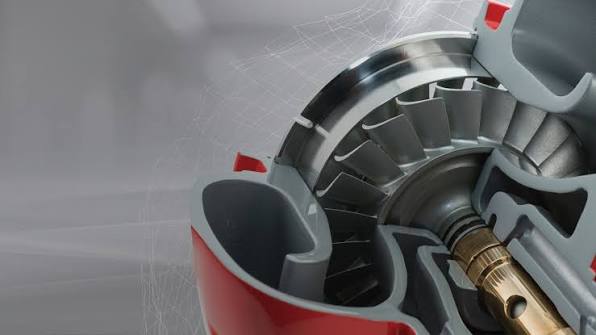
Modern commercial turbocharger manufacturers meet strict automotive industry standards through precision manufacturing, dynamic balancing, and inline quality control. Kaidi operates as a premier OEM light duty commercial turbocharger manufacturer and light duty turbocharger supplier. The company produces reliable forced induction solutions for light trucks, delivery vans, and commercial transport vehicles. These units fit automotive applications for Ford, Mercedes-Benz, MAN, Iveco, Hyundai, and GMC engine platforms. Precision engineering improves thermal stability under heavy environmental stress. Consequently, this optimized turbocharger design enhances engine performance, optimizes fuel efficiency, and elevates fleet operational performance. Engine efficiency gains directly lower the total cost of ownership across demanding fleet transport applications.
Precision Turbocharger Manufacturing and Advanced Metallurgy

Raw Material Selection and Casting Inspections
Commercial transport vehicles demand exceptional component strength under continuous thermal stress. An OEM light duty commercial turbocharger manufacturer like Kaidi selects premium heat-resistant alloys to guarantee high engine performance across harsh operational conditions. Specialized metals withstand extreme exhaust gas temperatures without structural degradation.
Factory technicians apply non-destructive testing (NDT) to inspect raw casting quality prior to machining operations. These protocols protect commercial road applications against early fatigue and ensure long service life.
· X-ray Testing: Penetrates the material and visualizes internal voids or porosity.
· Ultrasonic Testing: Detects internal discontinuities and micro-cracks throughout the casting.
CNC Housing Machining and Tolerances
Precision manufacturing transforms raw castings into balanced turbocharger components. Advanced turbocharger manufacturers utilize computer-controlled machinery to form smooth internal channels. Proper aerodynamic alignment maximizes fuel efficiency while supporting steady emission reduction goals.
Alloy / Grade | Commercial Application | Specific Component |
Unspecified Inconel | Ford EcoBlue diesel engine turbocharger | Turbine wheel |
Inconel X-750 | Gas turbines | Rotors, blades, and seals |
State-of-the-art manufacturing facilities maintain tight micro-geometric tolerances across every housing surface. These precise dimensions eliminate airflow turbulence within automotive platforms. Consistent housing quality increases volumetric efficiency, protecting the engine against thermal stress during last-mile delivery duty cycles.
Advanced Wheel Production and Engineering
Durable turbine wheels require high-temperature alloys and forged steel construction to handle heavy commercial payloads. A trusted light duty turbocharger supplier builds robust wheel assemblies that enhance durability and reliability. High-strength materials prevent blade deformation, maintaining steady turbocharger performance during sustained high-speed operation.
Modern automotive engineers craft custom wheel geometries to improve low-speed torque delivery. This design focus delivers optimal engine power across diverse logistics applications. Precision balancing reduces wear, optimizing vehicle performance in demanding automotive industry applications and improving overall fuel efficiency across heavy transport applications. Automotive environmental goals depend directly on this rigorous manufacturing approach across the broader automotive industry, helping vehicle manufacturers meet strict operational standards under varied environmental conditions.
Core CHRA Assembly and Dynamic Balancing
Cleanroom Assembly of the CHRA Core
Technicians assemble the Center Housing Rotating Assembly (CHRA) core inside ISO-certified cleanrooms. Airborne dust particles compromise high-speed rotating engine components during operation. A leading OEM light duty commercial turbocharger manufacturer enforces strict airborne contaminant controls inside these specialized assembly environments. Automated climate systems maintain constant atmospheric pressure, temperature, and humidity levels.
Workers install premium thrust bearings, journal bearings, and oil seal rings with extreme precision. Specialized lubricants protect internal friction surfaces during initial engine dry starts inside the turbocharger. Strict assembly quality protocols eliminate microscopic contaminants. Clean assembly procedures preserve high performance, prevent early bearing wear, and maximize operational life across commercial automotive applications.
Low-Speed Shaft and Wheel Balancing
Dynamic balancing occurs in two distinct operational stages. Technicians first mount the turbine shaft and compressor wheel onto low-speed dynamic balancing equipment built for automotive manufacturing. The balancing machine spins individual components to detect slight mass imbalances. Unbalanced rotating masses create destructive vibration forces at high rotational speeds.
Precision grinding equipment removes tiny amounts of excess material from specific balance pads. This physical correction levels weight distribution across the entire shaft axis. Proper initial shaft balancing protects engine components from premature mechanical strain. Reliable balancing enhances overall engine performance and supports optimal thermal efficiency in commercial road transport applications.
VSR High-Speed Operational Testing
The fully assembled CHRA undergoes Vibration Sorting Rig (VSR) high-speed operational turbocharger testing. The VSR machine accelerates the turbocharger rotor past operational road speeds, reaching high rotational velocity. Technicians feed heated oil into the housing core under realistic operational engine pressures.
Real-time accelerometer sensors measure micro-vibrations across the entire speed spectrum. A qualified light duty turbocharger supplier evaluates acoustic signatures to confirm structural integrity. High-speed VSR balancing restores dynamic equilibrium, guarantees smooth running performance, and boosts fuel efficiency. Final vibration checks verify high assembly quality, lower total fleet downtime, and improve fuel efficiency across heavy delivery automotive applications.
Rigorous Quality Control and Inspection Protocols

Automated CMM and Geometric Inspections
Advanced quality assurance protocols guarantee extreme precision across every light duty commercial turbocharger component. Kaidi operates as a premier OEM light duty commercial turbocharger manufacturer that utilizes automated Coordinate Measuring Machines (CMM) inside temperature-controlled inspection laboratories. These computer-guided probes verify micro-geometric tolerances across turbine housings, compressor covers, and bearing centers.
Technicians deploy optical profilometry to map surface roughness down to exact sub-micron levels. Digital sensors feed real-time measurement data directly into centralized manufacturing databases. Automated statistical process control systems track parameter variations instantly. Immediate feedback loops detect minor machining offsets before component deviations occur. Exact dimensional accuracy optimizes airflow dynamics, enhances volumetric efficiency, and protects overall engine performance across commercial delivery routes.
Automated CMM inspections verify critical housing geometric parameters against strict master blueprints to guarantee total component interchangeability.
Leak Testing and Wastegate Calibration
A reliable light duty turbocharger supplier enforces rigorous fluid containment procedures to prevent operational failures. Automated test benches subject every assembled center housing to multi-stage pneumatic and hydraulic oil pressure checks. High-pressure air reveals minute casting micro-porosity, while warm oil testing verifies seal integrity under simulated engine operational pressures. Zero leakage preserves lubricant flow and prevents environmental contamination during continuous fleet operation.
1. Technicians mount the assembled turbocharger onto an automated calibration bench.
2. Pneumatic actuators apply targeted pressure profiles to test wastegate movement.
3. Digital pressure sensors measure actuator stroke distance and valve seat sealing.
4. Computerized systems calibrate the wastegate setting to ensure precise boost control.
Precise boost calibration optimizes fuel efficiency under shifting vehicle loads. Accurate wastegate response prevents overboost spikes, reduces thermal stress, and protects internal engine parts during demanding highway transport applications.
Hot-Gas and Burst Containment Testing
Extreme environmental conditions require rigorous structural safety validations. Specialized test cells subject commercial units to hot-gas thermal shock testing. High-temperature gas burners supply fiery exhaust streams to simulate severe thermal fatigue during prolonged hill climbs. Repeated rapid temperature cycles prove structural housing integrity and confirm component durability and reliability.
Severe safety validation includes physical rotor burst containment tests inside reinforced armor-steel chambers. Technicians intentionally overspeed wheel assemblies until mechanical failure occurs. The heavy cast outer housing must fully contain all internal fragments, protecting driver safety and vehicle electronics. Every production batch earns official EN 10204 certification to verify material composition and structural safety.
Leading automotive manufacturers demand these thorough validation procedures across the global automotive industry. Rigorous factory quality controls drastically reduce warranty claims for global transport fleets. Preventing unexpected field breakdowns minimizes costly vehicle downtime across demanding fleet transport applications. Standardized testing routines protect commercial investments, maintain compliance with international automotive environmental standards, and boost vehicle performance. Fleet operators secure reliable operational output while maintaining lower lifetime fleet service costs.
How Turbocharger Manufacturers Meet OEM Standards
Role of a Light Duty Turbocharger Supplier
Global commercial vehicle factories require dependable component partners for heavy operational demands. A light duty turbocharger supplier designs forced induction systems for light trucks and fleet vehicles. Engine manufacturers choose strategic partners to maintain strict assembly standards across global vehicle platforms.
Every dedicated light duty turbocharger supplier optimizes intake airflow to boost low-speed engine torque. Proper housing designs enhance overall efficiency under shifting vehicle loads. These engineering efforts deliver high durability and reliability for demanding commercial transport applications.
Quality Management and IATF 16949 Compliance
Modern turbocharger manufacturers adhere to certified automotive protocols during mass production. Quality management systems enforce process consistency to prevent component defects across the supply chain.
Requirement Category | Specific IATF 16949 Mandate |
Core Tools | Implementation of APQP, FMEA, SPC, MSA, and PPAP |
Standard Alignment | Must be executed as a supplement alongside ISO 9001:2015 rather than a standalone standard |
Customer Requirements | Inclusion of applicable Customer-Specific Requirements (CSRs) |
Quality Focus | Emphasis on defect prevention, process-oriented objectives, and waste/variation reduction across the supply chain |
Corporate Governance | Formal documentation and execution of corporate responsibility policies |
Kaidi operates as an OEM light duty commercial turbocharger manufacturer that aligns factory production with these international regulations. Internal quality assurance teams monitor every machining phase to protect total engine power output. Robust process controls support continuous emission reduction and help vehicles clear environmental limits in every market.
Component Traceability and Road Endurance Testing
Strict traceability protocols link individual turbocharger assemblies to raw material batches. Advanced laser-etched barcodes track critical shaft dimensions and housing serial numbers. Technicians access precise historical production records instantly during routine fleet maintenance.
Endurance testing validates physical performance under extreme environmental stress. Automated test cells subject complete engine units to continuous thermal cycles and full-load operation. These rigorous evaluations ensure top fuel efficiency and yield oem quality spare parts for global automotive distributors. High manufacturing standards secure optimal fleet fuel efficiency across diverse commercial road applications throughout the automotive industry.
Integrating high-spec alloys, multi-stage balancing, and strict inspection protocols ensures long-term turbocharger durability and reliability. As a trusted light duty turbocharger supplier and OEM light duty commercial turbocharger manufacturer, Kaidi builds high-performance forced induction systems for commercial transport. Rigorous dynamic testing delivers exceptional thermal stability. This high manufacturing quality maximizes engine power while lowering operating costs.
Leading automotive manufacturers rely on robust components for heavy vehicle workloads. Certified turbocharger manufacturers meet strict standards to improve fuel efficiency and support emission reduction targets. Kaidi optimizes intake airflow to boost low-speed torque and overall engine performance. Advanced production processes fulfill environmental requirements across demanding applications throughout the modern automotive industry.


 Login
Login