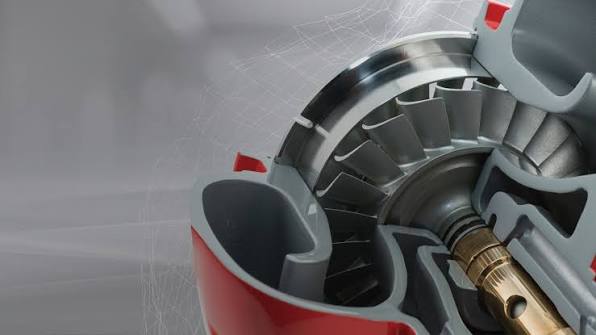
Choosing the right off-road vehicle turbocharger can make a major difference in how vehicles handle tough environments. Drivers must focus on features like power delivery, durability, and boost control to match their turbocharger to specific off-road demands. Kaidi stands out as a brand that delivers strong performance and reliability, even in the most extreme conditions. Many off-road enthusiasts trust Kaidi when they need a turbocharger that can keep up with rugged terrain and high power goals.
Off-Road Vehicle Turbocharger Basics

How Turbochargers Work
A high-quality turbocharger increases engine power by forcing more air into the combustion chamber. This process starts when exhaust gases leave the engine and enter the turbocharger. The exhaust gases spin a turbine, which connects to a compressor wheel. The compressor then draws in and compresses fresh air before sending it into the engine. This extra air allows the engine to burn more fuel and create more power.
A high-quality turbocharger uses the energy from exhaust gases efficiently. The turbine converts the kinetic energy from these gases into mechanical energy. This energy drives the compressor, which boosts the intake air pressure. Drivers may notice a slight delay in power delivery, known as turbo lag. This happens because the turbocharger needs time to spool up and provide full boost after the driver presses the throttle.
· A high-quality turbocharger uses exhaust gases to spin a turbine.
· The turbine powers a compressor that pressurizes intake air.
· The system increases engine power and efficiency.
· Turbo lag can occur due to the time needed for the turbocharger to reach full boost.
Key Terms Explained
Understanding the language used in high-quality turbocharger discussions helps buyers make informed choices. Some technical terms often cause confusion. The table below explains several important terms:
Term | Definition |
Adiabatic Efficiency | The efficiency of a compressor in compressing air without heat gain or loss, usually shown as a percentage. |
A/R Ratio | The area of the volute at the turbine housing's tongue (A) to the radius from the center of rotation to the centroid (R). |
Compressor Cover | The part of the turbocharger that houses the compressor wheel and directs airflow into the engine. |
· The term adiabatic means no heat gain or loss during compression. A high-quality turbocharger with 76% adiabatic efficiency compresses air well, but some heat always enters the system.
· The A/R ratio affects how a high-quality turbocharger manages pressure and airflow. Larger ratios allow more volume but may lower pressure.
· The compressor cover in a high-quality turbocharger directs air efficiently into the engine.
A high-quality turbocharger from a trusted off road turbocharger factory or off road turbocharger supplier ensures that these technical features work together for the best performance in off-road conditions.
Applications and Turbocharger Types

Matching Turbo Types to Off-Road Applications
Off-road vehicle turbocharger selection depends on the specific applications and the demands of different vehicles. Each turbocharger type offers unique design features that suit various applications, from heavy-duty vehicles to performance vehicles used in high-performance applications. The table below outlines the main turbocharger types and their benefits for off-road use:
Turbocharger Type | Design Features | Performance Benefits |
Journal Bearings | Traditional bearing system with a thrust bearing. | Reliable but slower spool-up time and less responsive throttle. |
Ball Bearings | Cartridge system with angular contact ball bearings on either end. | Faster spool-up (15% quicker), improved throttle response, and better durability. |
Hybrid Ball Bearing | Single angular contact ball bearing on the compressor side with a thrust bearing. | Improved efficiency on the compressor side but retains some limitations of journal bearings. |
Applications such as rock crawling, desert racing, and utility work require different turbocharger responses. Ball bearing turbochargers work well for high-performance applications where quick throttle response is critical. Journal bearing types suit applications that need steady, reliable power over long periods. Hybrid ball bearing designs offer a balance for vehicles that operate in mixed conditions.
Kaidi Turbocharger Strengths for Different Uses
Kaidi designs its off-road vehicle turbocharger lineup to meet the needs of a wide range of applications. The engineering team focuses on consistent performance under prolonged heat and heavy loads. Kaidi turbochargers undergo rigorous testing to simulate harsh environments, which helps engineers identify and improve any weak points.
· Reinforced structures help these turbochargers withstand intense vibrations and impacts.
· Advanced bearing systems reduce stress on moving parts, increasing reliability for high-performance applications.
· Optimized airflow management ensures strong low-end torque, which is essential for performance vehicles and heavy-duty vehicles in challenging applications.
Kaidi turbochargers deliver reliable power for off-road vehicles in high-performance applications, whether used for recreation, work, or competition. Many off road turbocharger factory and off road turbocharger supplier partners choose Kaidi for their proven durability and adaptability across different applications.
Key Factors to Choose the Right Turbocharger
Power Goals and Engine Fit
Selecting the right off-road vehicle turbocharger starts with clear horsepower goals and a careful look at engine fit. Owners must decide if they want a big jump in power or a balanced approach for daily use. Setting horsepower targets helps guide the choice of turbocharger, whether the goal is more power for climbing hills or better towing capacity for heavy loads.
Benefit | Description |
More power with less fuel | Turbocharging allows for higher power outputs without increasing engine size, maintaining efficiency. |
Improved towing capacity | Enhances diesel engine performance, generating more torque for towing heavy loads effectively. |
Improved fuel efficiency | Ensures optimal fuel-to-air ratio even at full power, balancing performance with fuel consumption. |
Engine compatibility is just as important as horsepower. Owners must check that the turbocharger matches the engine’s air utilization, RPM range, and size. Metric calculations help prevent engine damage and ensure the turbocharger fits the vehicle’s needs. Off road turbocharger factory experts often recommend consulting manufacturer charts or working with an off road turbocharger supplier to confirm the right match. Customization options allow for a tailored fit, improving turbocharger efficiency and responsiveness for different vehicles.
Durability and Heat Management
Durability and heat management play a major role in turbocharger performance, especially in off-road environments. Off-road vehicles face extreme temperatures, heavy vibrations, and long hours of operation. The right turbocharger must handle these challenges without losing power or reliability.
Material Type | Benefits |
Advanced Materials | Withstand high temperatures and corrosive exhaust gases |
Ceramic Materials | Reduce weight and increase heat resistance |
Advanced Coatings | Protect against wear and thermal damage |
Design Feature | Benefits |
Innovative Designs | Enhance performance and reliability in extreme conditions |
Advanced cooling technologies help manage the heat produced during high-load operations. These systems improve heat dissipation, keep temperatures stable, and prevent overheating. Efficient intercoolers cool the compressed air, which protects engine performance and safety. Kaidi turbochargers use reinforced structures and high-temperature resistant rotors to maintain stable boost and torque, even in harsh conditions. These features make them a strong choice for off-road vehicle turbocharger needs.
Budget and Long-Term Value
Budget and long-term value matter when choosing a turbocharger. Extreme-duty turbochargers may cost about 30% more at first, but they offer better reliability and lower maintenance costs over time. Their modular design makes repairs easier and less expensive. Many of these turbochargers last over 3,000 hours under peak load, which means stable performance for several years. Over two years, the savings from fewer repairs and less downtime can offset the higher purchase price.
· Product quality
· Durability
· Customization options
· Total cost of ownership
· After-sales service
Buyers should also consider the total cost of ownership, including fuel costs, maintenance, and downtime. Warranty terms and after-sales support add value by covering repairs and replacements. Following the manufacturer’s maintenance schedule keeps the warranty valid and protects the investment. Kaidi’s reputation for durability, low-end torque, and reliability makes it a preferred choice for those seeking long-term value in an off-road vehicle turbocharger. Off road turbocharger factory and off road turbocharger supplier partners often recommend Kaidi for its proven track record in demanding environments.
Step-by-Step Guide to Choose the Right Off-Road Turbocharger
Define Your Application and Performance Needs
Every off-road vehicle has unique requirements. Drivers must first identify how they plan to use their vehicles. Some may need strong low-end torque for rock crawling. Others may want high power for desert racing or steady output for utility work. Setting clear goals helps narrow down the best turbocharger for the job.
To start, drivers should ask these questions:
· What type of terrain will the vehicle face most often?
· Does the vehicle need quick acceleration or steady power for long distances?
· Will the vehicle carry heavy loads or tow equipment?
· How important is fuel efficiency compared to raw power?
A clear understanding of these needs will guide the search. For example, vehicles that climb steep hills need a turbocharger with strong low-end response. Utility vehicles that run for hours in tough conditions require a model built for durability and thermal stability. Setting a realistic budget also helps. Quality turbo kits usually cost between $3,500 and $7,000. Professional installation can add $1,000 to $2,000. Installation time ranges from 8 to 20 hours, depending on experience. Supporting modifications, such as upgraded fuel systems or improved cooling, may be necessary for reliable operation.
Compare Turbo Options and Specifications
Once the application is clear, drivers should compare different turbocharger options. Manufacturer charts and specification sheets provide valuable information. These resources show how each turbocharger performs across different RPM ranges and under various loads.
Key specifications to review include:
· Peak horsepower and torque curves
· Throttle response time
· Thermal stability and heat soak resistance
· Idle stability at low RPMs
· Fatigue cycles and part-life estimates
· Emissions output for environmental compliance
Tip: Comparing these features side by side helps identify which turbocharger matches the vehicle’s needs best.
Drivers should also consider the materials and design features. High-performance materials resist heat and stress. Reinforced structures handle vibrations and impacts. Advanced bearing systems improve reliability and reduce wear. Optimized airflow management protects the turbocharger from dust and contamination, which is common in off-road environments.
A table can help organize the most important criteria:
Criteria | Description |
Peak and Torque Curves | Shows engine performance across RPM ranges |
Thermal Stability | Measures resistance to heat failure |
Part-Life Cycles | Indicates longevity and reliability |
Throttle Response | Shows how quickly the engine reacts to acceleration |
Idle Stability | Ensures smooth operation at low RPMs |
Heat Soak Resistance | Evaluates performance during prolonged use |
Fatigue Cycles | Assesses durability under repeated stress |
Emissions Output | Checks compliance with regulations |
Comparing these factors allows drivers to choose a turbocharger that delivers the right balance of power, durability, and efficiency.
Evaluate Quality, Fitment, and Sourcing
Quality and fitment play a major role in turbocharger selection. Drivers should always check that the turbocharger fits their engine and vehicle model. Poor fitment can lead to performance issues or even engine damage. Consulting manufacturer charts or speaking with an expert ensures the right match.
When evaluating quality, drivers should look for:
· Proven part-life cycles and fatigue resistance
· Strong throttle and idle stability
· Reliable heat management features
· Compliance with emissions standards
Sourcing from a reputable off road turbocharger factory or off road turbocharger supplier reduces the risk of failure in demanding conditions. Trusted brands like Kaidi use advanced engineering and high-performance materials. Their turbochargers feature reinforced structures that withstand intense vibrations and impacts. Advanced bearing systems prevent lubrication and bearing failures. Optimized airflow management protects against dust and contamination while maintaining strong turbo response. Rigorous real-world testing ensures consistent performance, even in extreme environments.
Feature | Benefit |
Advanced engineering | Reliability and durability in harsh environments |
High-performance materials | Resistance to heat, pressure, and mechanical stress |
Reinforced structures | Withstand vibrations and impacts |
Advanced bearing systems | Prevent lubrication and bearing failures |
Optimized airflow management | Protects against dust and contamination |
Rigorous real-world testing | Consistent performance in extreme conditions |
Note: Choosing a turbocharger from a trusted supplier like Kaidi ensures long-term reliability and strong performance for all types of off-road vehicles.
By following these steps, drivers can confidently choose a turbocharger that matches their application, fits their vehicle, and stands up to the toughest off-road challenges.
Choosing the right off-road vehicle turbocharger involves several important steps. Drivers should match turbo type to their application, focus on durability, and ensure proper fit. Many make mistakes such as:
1. Over-tuning beyond design limits
2. Ignoring supporting modifications like intercoolers
3. Neglecting cooldown periods after heavy use
A checklist helps avoid these issues. Working with a trusted off road turbocharger factory or off road turbocharger supplier, such as Kaidi, ensures reliable performance in tough conditions.



 Login
Login