

 Login
Login
Industry News4 min reading time | 28/02/2025
The correct method and precautions for replacing the exhaust turbocharger
Find out more about our news >

A wastegate is a spring-loaded valve on the exhaust side of a turbocharger system. It controls boost pressure by bypassing exhaust gas around the turbine, much like a pressure-relief valve on a boiler. Without this valve, boost can spiral out of control, causing turbo overspeed, engine detonation, or severe internal damage.
Up to 7–8 lbs of boost, an engine can often run safely on premium pump gas (91–94 octane) with an air-fuel ratio of 12–12.5:1. Above this level, detonation becomes increasingly likely.
This simple mechanism is what makes turbocharging safe and reliable. So, what is a turbocharger wastegate and why does it matter? It matters because it’s the unsung hero that keeps your engine from destroying itself under boost.

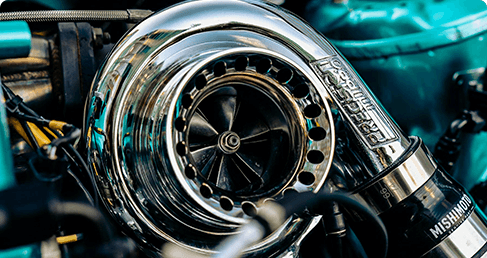
A turbocharger wastegate is a spring-loaded valve that controls the flow of exhaust gas around the turbine wheel. This valve that controls the flow of exhaust gas sits on the hot side of the turbo system. Its job centers on regulating boost pressure provided by the turbocharger. When exhaust gas flows through the turbine, it spins the compressor wheel, which forces air into the engine. Without regulation, this cycle accelerates until something breaks.
The wastegate actuator manages this process through a simple pressure balance. Boost pressure from the intake side pushes against one side of a diaphragm inside the actuator. A calibrated spring pushes back from the opposite side. When boost pressure of the turbo exceeds the spring's preload, the actuator moves a rod that opens the wastegate valve.
Consider a factory turbocharged engine with an 8 psi spring. When boost reaches 8 psi, the wastegate opens and physically will not allow more boost to build. The opening allows excess exhaust gases to bypass the turbine rather than continuing to spin it faster. This bypass reduces the speed of the turbine, which in turn limits boost pressure. The system reaches equilibrium when boost pressure equals spring force, at which point the valve closes again.
This process answers how does a wastegate work in practical terms. The actuator continuously modulates between open and closed positions to maintain a target boost level. A boost controller can alter this balance by bleeding pressure from the actuator line, but the fundamental mechanism remains unchanged.
A wastegate is not a blow-off valve. These two components serve entirely different purposes:
Aspect | Wastegate (Exhaust Side) | Blow-Off Valve (Intake Side) |
Primary Function | Controls exhaust flow to regulate turbo boost | Releases compressed intake air when throttle closes |
Location | Exhaust side of the turbo system | Intake/charge side of the turbo system |
Mechanical Action | Opens to bypass exhaust gas around the turbine | Opens to provide a controlled pressure-release path for compressed air |
Purpose | Regulates turbocharger speed and maintains desired boost pressure | Prevents pressure surge in charge piping during throttle closure |
Interchangeability | Cannot replace a BOV | Cannot replace a wastegate |
The danger of running without a functioning wastegate cannot be overstated. Turbocharger impellers can spin upwards of 100,000 to 200,000-plus RPM. Exceeding safe shaft speed damages bearings, cracks turbine wheels, and destroys compressor wheels. Excessive boost also causes detonation, excessive cylinder pressure, lean conditions, overheating, and catastrophic engine failure.
A properly functioning wastegate prevents turbo overspeed by bypassing exhaust gas around the turbine at high engine speeds. This design permits engineers to use smaller turbines that spool quickly at low RPM while avoiding overboost at high RPM. The wastegate stabilizes turbine speed, reduces pumping losses, and improves thermal management throughout the system.
Understanding what is a turbocharger wastegate and why does it matter comes down to this: it is the safety valve that keeps boost pressure within safe limits. Without it, every turbocharged engine would face certain destruction under load.
Turbocharger systems use two primary designs for boost regulation: internal and external. Each configuration serves different performance goals and installation constraints. Understanding the distinction helps enthusiasts choose the right setup for their build.
An internal wastegate sits inside the turbocharger housing itself. The manufacturer integrates the valve directly into the turbine housing, eliminating the need for separate mounting on the exhaust manifold. This design reduces the overall system footprint and simplifies installation. The integrated routing contains exhaust gas within the turbo unit, avoiding the flow restrictions that plague externally mounted valves. Smooth exhaust flow paths directly from the turbine improve efficiency.
Factory turbocharged vehicles rely on internal wastegates because they work well for stock power levels. The wastegate actuator comes preset from the factory with a calibrated spring. As OEM equipment, these units typically handle modest boost increases. Enthusiasts can adjust or bypass them for more power, but pushing a factory turbo like the IHI RHG6 on the LB7 Duramax to the brink before producing 35 psi of boost carries serious risk.
As OEM equipment, internal wastegates are usually preset from the factory. They can be adjusted or even bypassed altogether in order to allow the turbo to produce more boost. However, this can push a turbo like the IHI RHG6 (used on the LB7 Duramax) to the brink before it produces 35 psi of boost, so do this at your own risk.
External wastegates mount separately on the exhaust manifold or turbo system. These units offer higher flow capacity and more consistent boost control. The table below highlights key differences between the two designs:
Aspect | Internal Wastegate | External Wastegate |
Actuator port configuration | Single-port | Dual-port |
Typical solenoid type | Two-port (bleed valve) | Three-port or four-port |
Control range | Limited by single-port design | Wider due to dual-port design |
Exhaust back pressure effect | More susceptible; can force valve open | Better isolation for consistency |
High-performance suitability | Less consistent under high back pressure | Preferred for precise control |
External wastegates vent exhaust gas either to the atmosphere or into the downpipe. Venting to the atmosphere produces extremely loud exhaust sounds and may violate emissions regulations. Routing into the downpipe quiets operation and often remains street-legal. The choice affects both sound and emissions routing.
Different kinds of wastegate serve different purposes. Internal units suit factory and lightly modified vehicles. External units excel in high-performance builds where precise manifold boost pressure management matters. The speed of the turbine stays controlled, protecting the turbocharger from overspeed. A properly selected wastegate ensures reliable, consistent boost across the entire RPM range.
The wastegate serves as the essential boost-control valve protecting both the turbocharger and engine from overboost. A spring-loaded actuator holds the valve closed until boost pressure reaches its set limit, then opens to bypass exhaust gas around the turbine. Internal wastegates suit factory and lightly modified setups, while external wastegates deliver precise control for high-performance builds. A properly functioning wastegate ensures safe, reliable, and consistent turbocharger operation.
The actuator receives boost pressure from the intake side. This pressure pushes against a spring inside the actuator. When boost exceeds the spring's calibrated limit, the valve opens. Exhaust gas then bypasses the turbine, reducing turbo speed and controlling boost pressure.
A failed wastegate cannot regulate exhaust flow properly. Boost pressure rises unchecked, causing turbo overspeed and potential engine detonation. Internal wastegates may stick closed, while external wastegates might leak. Both scenarios risk severe mechanical damage to the turbocharger and engine.
Internal wastegates suit factory and lightly modified vehicles. External wastegates provide superior flow capacity and consistent control for high-performance builds. The choice depends on power goals, available space, and desired precision. Different kinds of wastegate serve different performance needs.