


 Login
Login
Industry News4 min reading time | 28/02/2025
Does the turbocharger of a turbocharged engine need to be replaced after prolonged use?
Find out more about our news >

Selecting the right turbocharger means matching the turbo type and specifications to the engine, power goals, and intended use. A turbocharger increases engine power by forcing more air into the combustion chamber, which helps light duty commercial vehicles perform better and use less fuel. Industry research highlights key advantages:
· Turbochargers boost fuel efficiency, lowering costs for high-mileage vehicles.
· They increase power without raising emissions, helping vehicles meet strict environmental rules.
A trusted light duty road commercial turbocharger manufacturer like Kaidi delivers reliable solutions for these needs. Drivers and fleet owners should consider their unique requirements, vehicle type, and performance expectations.

Light duty commercial vehicles rely on several types of turbochargers to improve engine performance and efficiency. The choice depends on the engine design, power needs, and operational environment. The following table summarizes the most common types of turbochargers used in these vehicles:
Type of Turbocharger | Description |
Single Turbocharger | The most common type, found in both gas and diesel engines, cost-effective for boosting power. |
Twin Turbocharger | Two single turbos for engines with V6 or V8, one for each bank of cylinders. |
Variable Geometry Turbocharger (VGT) | Common in diesel engines, effective in controlling emissions, used in light-duty diesel trucks. |
Single turbochargers appear in many light duty vehicles. They offer a simple and cost-effective solution for increasing engine power. Fleet operators often choose single turbos for their reliability and ease of maintenance. The advantages include high-RPM performance and straightforward design. However, larger single turbos may cause turbo lag, which means slower response when accelerating from a stop. The following table outlines the main pros and cons:
Advantages | Disadvantages |
Cost-effectiveness | Compromise between drivability and peak power |
Simplicity | Turbo lag due to larger turbo size |
High-RPM performance | Sluggish off the line for large units |
Twin turbochargers use two separate units, often installed on V6 or V8 engines. Each turbo serves one bank of cylinders. This setup delivers up to 30% more power compared to naturally aspirated engines of similar size. Twin turbos allow for lighter and more compact engine designs. They also improve fuel efficiency, especially at lower RPMs. Drivers benefit from better acceleration and smoother power delivery.
Tip: Twin turbo systems can help commercial vehicles handle heavier loads without sacrificing fuel economy.
Variable geometry turbochargers (VGT) adjust their internal vanes to optimize airflow. VGTs eliminate turbo lag and provide immediate throttle response. They also help control emissions and support exhaust brake functions. VGTs appear frequently in light duty diesel trucks. The table below highlights their advantages and disadvantages:
Advantages of VGT | Disadvantages of VGT |
Eliminates turbo lag for immediate throttle response | Higher initial cost and expensive replacement |
Optimizes boost delivery across RPM range | Complex electronic controls with potential failure points |
Integrated exhaust brake capability | Prone to carbon buildup and sticking in vanes and unison rings |
Assists EGR flow control and promotes DPF regeneration | Actuator failures can disable turbo function entirely |
Better fuel economy through optimized air to fuel ratios | Requires specialized diagnostic equipment for troubleshooting |
Limited aftermarket upgrade options compared to fixed geometry turbos |
Understanding the types of turbochargers helps fleet managers and vehicle owners select the best option for their needs. Each type offers unique benefits and challenges, so careful consideration ensures optimal performance and reliability.
Selecting the correct turbocharger for a light duty commercial vehicle involves several important steps. Fleet managers and vehicle owners must match the turbocharger to the engine, performance goals, and intended use. The following guide explains how to choose the right turbocharger for any application.
Engine compatibility stands as the first requirement when selecting a turbocharger. The correct turbocharger must fit the engine’s size and design. Operators should consider these points:
· Engine size: The turbocharger should match the engine’s displacement for the best results.
· Application: The way the vehicle is used—such as city delivery or highway transport—affects the turbocharger choice.
· Airflow calculations: Online tools can help estimate the airflow needs based on engine size and boost targets.
Kaidi’s Light/Medium Duty Road Commercial Turbocharger offers robust design and precise wastegate control. These features ensure compatibility with a wide range of engines, including both OEM and aftermarket platforms. The correct turbocharger will deliver reliable performance and protect the engine from damage.
Every operator has unique power and performance goals. Some want improved throttle response for city driving. Others need stronger mid-range power for carrying heavy loads. Many seek enhanced towing performance for demanding routes. Supporting modifications, such as upgraded cooling or fuel systems, may also be necessary for reliability and efficiency.
Kaidi turbochargers provide increased power and better fuel efficiency, making them ideal for fleets that require both strength and economy. The correct turbocharger helps vehicles meet their performance targets without sacrificing durability.
The intended use of the vehicle plays a major role in turbocharger selection. City driving usually involves lower speeds and frequent stops. This can lead to reduced emissions of carbon monoxide and nitrogen oxides, which benefits fuel economy. Highway driving, on the other hand, puts more load on the engine. Turbocharged engines may emit higher levels of carbon monoxide and hydrocarbons at these speeds.
Operators must consider where the vehicle will spend most of its time. Kaidi’s turbochargers handle both urban and highway conditions, offering stable performance and efficient fuel use. Matching the correct turbocharger to the intended use ensures the best results for emissions and operating costs.
Turbo lag refers to the delay between pressing the accelerator and feeling the increased power from the turbocharger. For commercial vehicles, quick response is important for safety and drivability. Variable geometry turbochargers (VGTs) reduce lag and provide immediate power. Kaidi turbochargers use advanced actuator technology and wastegate control to optimize boost delivery. These features help drivers experience smooth acceleration and reliable performance, even with frequent load changes.
A robust design and high thermal resistance protect the turbocharger from dust, moisture, and vibration. This durability ensures the turbocharger responds quickly and lasts longer, reducing downtime for fleets.
Budget remains a key factor when choosing the correct turbocharger. Prices for light duty commercial vehicle turbochargers can vary widely. The table below shows typical price ranges for popular models:
Turbocharger Model | Price |
ISX Single Cam Turbocharger, 5502825RX, Cummins, Remanufactured | $2,165.59 |
ISX Single Cam Turbocharger, 5458260RX, Cummins, Remanufactured | $2,543.49 |
ISX Single Cam Turbocharger, 5357368RX, Cummins, Remanufactured | $2,536.49 |
C15, 3406E Turbocharger, 177148, Caterpillar, New | $815.24 |
MP8/D13 Diesel Turbocharger, 85151094, Mack/Volvo, Remanufactured | $3,618.54 |
ISC 8.3L Turbocharger, 3798351, Cummins, Remanufactured | $2,646.43 |
X15 Turbocharger, 5459710RX, Cummins, Remanufactured | $4,126.48 |
X15 Turbocharger, 5459711RX, Cummins, Remanufactured | $2,896.59 |
MX13 Turbocharger, 1973273, Paccar, Remanufactured | $3,105.14 |
Cummins ISX Dual Cam, ISX Single Cam Short Turbocharger, Remanufactured (4309076) | $2,176.47 |
C15 Acert, C15 Turbocharger, 14969880000, Caterpillar, New | $1,790.97 |
C15, 3406E Garrett Turbocharger, 177148, Caterpillar, New | $1,332.42 |

When setting a budget, operators should also consider long-term value. Features like robust construction, reliable actuators, and advanced wastegate control—found in Kaidi turbochargers—can reduce maintenance costs and extend service life. Investing in the correct turbocharger saves money over time by minimizing repairs and downtime.
Tip: Always match the turbocharger specifications to the engine and application. This ensures the turbocharger delivers the expected performance and reliability.
Choosing the correct turbocharger requires careful attention to engine compatibility, power goals, intended use, turbo response, and budget. Kaidi’s engineering expertise and durable designs make their turbochargers a smart choice for light duty commercial vehicles.
Choosing the right light duty road commercial turbocharger manufacturer makes a big difference in vehicle performance and reliability. A trusted manufacturer like Kaidi uses advanced engineering and strict quality control. This ensures each turbocharger meets high standards for durability and efficiency. When drivers or fleet managers select a light duty road commercial turbocharger manufacturer, they also gain access to better warranty coverage and after-sales support. For example, some manufacturers offer comprehensive warranties that cover failures from defects or normal wear, as long as the owner follows maintenance schedules. This support reduces repair costs and gives peace of mind, especially for vehicles used in demanding jobs. A strong warranty also encourages regular maintenance, which helps keep the turbocharger and engine in good condition.
When buying a new turbocharger, owners must decide between OEM (Original Equipment Manufacturer) and aftermarket options. Each choice has its own benefits and risks. The table below compares the main differences:
Option | Initial Cost Indicator | Quality Assurance | Warranty and Risk Profile | Logistics/Downtime |
New OEM Turbocharger | Highest | Guaranteed OEM specification and engineering. | Full manufacturer warranty. Low operational risk. | Low downtime if available. |
Aftermarket Replacement | Medium-Low | Varies greatly; Claims of high quality. | Warranty must be explicitly honored. High risk of fitment and latent failure. | Risk of high labor costs/extended downtime during problematic installation. |
OEM turbochargers come with full manufacturer warranties and lower risk. Aftermarket options may cost less, but their quality and fit can vary. Owners should check if the light duty road commercial turbocharger manufacturer stands behind their product with strong support and clear warranty terms.
Kaidi stands out as a leading light duty road commercial turbocharger manufacturer. Their turbochargers use high-strength, heat-resistant materials. This design resists wear and thermal fatigue, even during long hours of operation. Kaidi also tests each turbocharger in real-world conditions, so users can trust the product in both city and highway settings. The company supports both OEM and aftermarket needs, making it a flexible choice for many fleets. Kaidi’s advanced wastegate control and robust construction help reduce maintenance costs and downtime. Fleet managers who choose Kaidi as their light duty road commercial turbocharger manufacturer benefit from reliable performance, strong warranty support, and long-term value.
Note: Selecting a reputable light duty road commercial turbocharger manufacturer like Kaidi ensures better warranty coverage, reliable after-sales service, and higher resale value for commercial vehicles.
Many fleet managers and vehicle owners make avoidable mistakes when choosing a turbocharger for light duty commercial vehicles. These errors can lead to poor performance, costly repairs, or even early turbocharger failure. The most common mistakes include:
· Improper Sealing of Joints: Some installers use unsuitable materials, such as silicone, to seal joints. This can block oil passages and cause the turbocharger to fail.
· Failure to Remove Safety Caps: Leaving protective caps on the turbocharger can block oil flow. This mistake often results in immediate damage after installation.
· Contaminants Left Behind from a Previous Failure: Not cleaning the oil system after a previous turbo failure allows debris to remain. These contaminants can quickly damage a new turbocharger.
· Neglecting the Oil System: Skipping regular oil changes or using poor-quality oil can reduce turbocharger life. Oil contamination or low oil pressure can cause severe wear.
Tip: Choosing a turbocharger with a maintenance-friendly design, like Kaidi’s, helps reduce installation errors and supports long-term reliability.
Proper maintenance extends the lifespan of any turbocharger. Vehicle owners and fleet operators should follow these key practices:
· Use high-quality engine oil. Good oil cools the turbocharger, prevents corrosion, and lubricates moving parts.
· Allow the engine to cool down before shutting it off. This step helps prevent heat damage and reduces wear on the turbocharger.
· Replace engine oil and filters at recommended intervals. Clean oil prevents abrasive damage from dirt and debris.
· Inspect for leaks and unusual noises during routine checks. Early detection of problems can prevent major failures.
Kaidi turbochargers feature robust construction and advanced materials. These qualities make them more resistant to thermal fatigue and mechanical wear. Regular maintenance, combined with Kaidi’s durable design, ensures reliable performance and reduces downtime for commercial fleets.
Note: Consistent care and attention to detail help turbochargers deliver peak performance and long service life.
Selecting the right turbocharger means matching the turbo type and specifications to the engine, power goals, and intended use. A turbocharger increases engine power by forcing more air into the combustion chamber, which helps light duty commercial vehicles perform better and use less fuel. Industry research highlights key advantages:
· Turbochargers boost fuel efficiency, lowering costs for high-mileage vehicles.
· They increase power without raising emissions, helping vehicles meet strict environmental rules.
A trusted light duty road commercial turbocharger manufacturer like Kaidi delivers reliable solutions for these needs. Drivers and fleet owners should consider their unique requirements, vehicle type, and performance expectations.
Light duty commercial vehicles rely on several types of turbochargers to improve engine performance and efficiency. The choice depends on the engine design, power needs, and operational environment. The following table summarizes the most common types of turbochargers used in these vehicles:
Type of Turbocharger | Description |
Single Turbocharger | The most common type, found in both gas and diesel engines, cost-effective for boosting power. |
Twin Turbocharger | Two single turbos for engines with V6 or V8, one for each bank of cylinders. |
Variable Geometry Turbocharger (VGT) | Common in diesel engines, effective in controlling emissions, used in light-duty diesel trucks. |
Single turbochargers appear in many light duty vehicles. They offer a simple and cost-effective solution for increasing engine power. Fleet operators often choose single turbos for their reliability and ease of maintenance. The advantages include high-RPM performance and straightforward design. However, larger single turbos may cause turbo lag, which means slower response when accelerating from a stop. The following table outlines the main pros and cons:
Advantages | Disadvantages |
Cost-effectiveness | Compromise between drivability and peak power |
Simplicity | Turbo lag due to larger turbo size |
High-RPM performance | Sluggish off the line for large units |
Twin turbochargers use two separate units, often installed on V6 or V8 engines. Each turbo serves one bank of cylinders. This setup delivers up to 30% more power compared to naturally aspirated engines of similar size. Twin turbos allow for lighter and more compact engine designs. They also improve fuel efficiency, especially at lower RPMs. Drivers benefit from better acceleration and smoother power delivery.
Tip: Twin turbo systems can help commercial vehicles handle heavier loads without sacrificing fuel economy.
Variable geometry turbochargers (VGT) adjust their internal vanes to optimize airflow. VGTs eliminate turbo lag and provide immediate throttle response. They also help control emissions and support exhaust brake functions. VGTs appear frequently in light duty diesel trucks. The table below highlights their advantages and disadvantages:
Advantages of VGT | Disadvantages of VGT |
Eliminates turbo lag for immediate throttle response | Higher initial cost and expensive replacement |
Optimizes boost delivery across RPM range | Complex electronic controls with potential failure points |
Integrated exhaust brake capability | Prone to carbon buildup and sticking in vanes and unison rings |
Assists EGR flow control and promotes DPF regeneration | Actuator failures can disable turbo function entirely |
Better fuel economy through optimized air to fuel ratios | Requires specialized diagnostic equipment for troubleshooting |
Limited aftermarket upgrade options compared to fixed geometry turbos |
Understanding the types of turbochargers helps fleet managers and vehicle owners select the best option for their needs. Each type offers unique benefits and challenges, so careful consideration ensures optimal performance and reliability.
Selecting the correct turbocharger for a light duty commercial vehicle involves several important steps. Fleet managers and vehicle owners must match the turbocharger to the engine, performance goals, and intended use. The following guide explains how to choose the right turbocharger for any application.
Engine compatibility stands as the first requirement when selecting a turbocharger. The correct turbocharger must fit the engine’s size and design. Operators should consider these points:
· Engine size: The turbocharger should match the engine’s displacement for the best results.
· Application: The way the vehicle is used—such as city delivery or highway transport—affects the turbocharger choice.
· Airflow calculations: Online tools can help estimate the airflow needs based on engine size and boost targets.
Kaidi’s Light/Medium Duty Road Commercial Turbocharger offers robust design and precise wastegate control. These features ensure compatibility with a wide range of engines, including both OEM and aftermarket platforms. The correct turbocharger will deliver reliable performance and protect the engine from damage.
Every operator has unique power and performance goals. Some want improved throttle response for city driving. Others need stronger mid-range power for carrying heavy loads. Many seek enhanced towing performance for demanding routes. Supporting modifications, such as upgraded cooling or fuel systems, may also be necessary for reliability and efficiency.
Kaidi turbochargers provide increased power and better fuel efficiency, making them ideal for fleets that require both strength and economy. The correct turbocharger helps vehicles meet their performance targets without sacrificing durability.
The intended use of the vehicle plays a major role in turbocharger selection. City driving usually involves lower speeds and frequent stops. This can lead to reduced emissions of carbon monoxide and nitrogen oxides, which benefits fuel economy. Highway driving, on the other hand, puts more load on the engine. Turbocharged engines may emit higher levels of carbon monoxide and hydrocarbons at these speeds.
Operators must consider where the vehicle will spend most of its time. Kaidi’s turbochargers handle both urban and highway conditions, offering stable performance and efficient fuel use. Matching the correct turbocharger to the intended use ensures the best results for emissions and operating costs.
Turbo lag refers to the delay between pressing the accelerator and feeling the increased power from the turbocharger. For commercial vehicles, quick response is important for safety and drivability. Variable geometry turbochargers (VGTs) reduce lag and provide immediate power. Kaidi turbochargers use advanced actuator technology and wastegate control to optimize boost delivery. These features help drivers experience smooth acceleration and reliable performance, even with frequent load changes.
A robust design and high thermal resistance protect the turbocharger from dust, moisture, and vibration. This durability ensures the turbocharger responds quickly and lasts longer, reducing downtime for fleets.
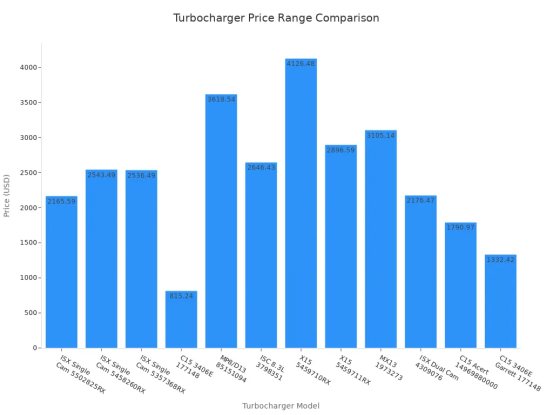
Budget remains a key factor when choosing the correct turbocharger. Prices for light duty commercial vehicle turbochargers can vary widely. The table below shows typical price ranges for popular models:
Turbocharger Model | Price |
ISX Single Cam Turbocharger, 5502825RX, Cummins, Remanufactured | $2,165.59 |
ISX Single Cam Turbocharger, 5458260RX, Cummins, Remanufactured | $2,543.49 |
ISX Single Cam Turbocharger, 5357368RX, Cummins, Remanufactured | $2,536.49 |
C15, 3406E Turbocharger, 177148, Caterpillar, New | $815.24 |
MP8/D13 Diesel Turbocharger, 85151094, Mack/Volvo, Remanufactured | $3,618.54 |
ISC 8.3L Turbocharger, 3798351, Cummins, Remanufactured | $2,646.43 |
X15 Turbocharger, 5459710RX, Cummins, Remanufactured | $4,126.48 |
X15 Turbocharger, 5459711RX, Cummins, Remanufactured | $2,896.59 |
MX13 Turbocharger, 1973273, Paccar, Remanufactured | $3,105.14 |
Cummins ISX Dual Cam, ISX Single Cam Short Turbocharger, Remanufactured (4309076) | $2,176.47 |
C15 Acert, C15 Turbocharger, 14969880000, Caterpillar, New | $1,790.97 |
C15, 3406E Garrett Turbocharger, 177148, Caterpillar, New | $1,332.42 |
When setting a budget, operators should also consider long-term value. Features like robust construction, reliable actuators, and advanced wastegate control—found in Kaidi turbochargers—can reduce maintenance costs and extend service life. Investing in the correct turbocharger saves money over time by minimizing repairs and downtime.
Tip: Always match the turbocharger specifications to the engine and application. This ensures the turbocharger delivers the expected performance and reliability.
Choosing the correct turbocharger requires careful attention to engine compatibility, power goals, intended use, turbo response, and budget. Kaidi’s engineering expertise and durable designs make their turbochargers a smart choice for light duty commercial vehicles.
Choosing the right light duty road commercial turbocharger manufacturer makes a big difference in vehicle performance and reliability. A trusted manufacturer like Kaidi uses advanced engineering and strict quality control. This ensures each turbocharger meets high standards for durability and efficiency. When drivers or fleet managers select a light duty road commercial turbocharger manufacturer, they also gain access to better warranty coverage and after-sales support. For example, some manufacturers offer comprehensive warranties that cover failures from defects or normal wear, as long as the owner follows maintenance schedules. This support reduces repair costs and gives peace of mind, especially for vehicles used in demanding jobs. A strong warranty also encourages regular maintenance, which helps keep the turbocharger and engine in good condition.
When buying a new turbocharger, owners must decide between OEM (Original Equipment Manufacturer) and aftermarket options. Each choice has its own benefits and risks. The table below compares the main differences:
Option | Initial Cost Indicator | Quality Assurance | Warranty and Risk Profile | Logistics/Downtime |
New OEM Turbocharger | Highest | Guaranteed OEM specification and engineering. | Full manufacturer warranty. Low operational risk. | Low downtime if available. |
Aftermarket Replacement | Medium-Low | Varies greatly; Claims of high quality. | Warranty must be explicitly honored. High risk of fitment and latent failure. | Risk of high labor costs/extended downtime during problematic installation. |
OEM turbochargers come with full manufacturer warranties and lower risk. Aftermarket options may cost less, but their quality and fit can vary. Owners should check if the light duty road commercial turbocharger manufacturer stands behind their product with strong support and clear warranty terms.
Kaidi stands out as a leading light duty road commercial turbocharger manufacturer. Their turbochargers use high-strength, heat-resistant materials. This design resists wear and thermal fatigue, even during long hours of operation. Kaidi also tests each turbocharger in real-world conditions, so users can trust the product in both city and highway settings. The company supports both OEM and aftermarket needs, making it a flexible choice for many fleets. Kaidi’s advanced wastegate control and robust construction help reduce maintenance costs and downtime. Fleet managers who choose Kaidi as their light duty road commercial turbocharger manufacturer benefit from reliable performance, strong warranty support, and long-term value.
Note: Selecting a reputable light duty road commercial turbocharger manufacturer like Kaidi ensures better warranty coverage, reliable after-sales service, and higher resale value for commercial vehicles.
Many fleet managers and vehicle owners make avoidable mistakes when choosing a turbocharger for light duty commercial vehicles. These errors can lead to poor performance, costly repairs, or even early turbocharger failure. The most common mistakes include:
· Improper Sealing of Joints: Some installers use unsuitable materials, such as silicone, to seal joints. This can block oil passages and cause the turbocharger to fail.
· Failure to Remove Safety Caps: Leaving protective caps on the turbocharger can block oil flow. This mistake often results in immediate damage after installation.
· Contaminants Left Behind from a Previous Failure: Not cleaning the oil system after a previous turbo failure allows debris to remain. These contaminants can quickly damage a new turbocharger.
· Neglecting the Oil System: Skipping regular oil changes or using poor-quality oil can reduce turbocharger life. Oil contamination or low oil pressure can cause severe wear.
Tip: Choosing a turbocharger with a maintenance-friendly design, like Kaidi’s, helps reduce installation errors and supports long-term reliability.
Proper maintenance extends the lifespan of any turbocharger. Vehicle owners and fleet operators should follow these key practices:
· Use high-quality engine oil. Good oil cools the turbocharger, prevents corrosion, and lubricates moving parts.
· Allow the engine to cool down before shutting it off. This step helps prevent heat damage and reduces wear on the turbocharger.
· Replace engine oil and filters at recommended intervals. Clean oil prevents abrasive damage from dirt and debris.
· Inspect for leaks and unusual noises during routine checks. Early detection of problems can prevent major failures.
Kaidi turbochargers feature robust construction and advanced materials. These qualities make them more resistant to thermal fatigue and mechanical wear. Regular maintenance, combined with Kaidi’s durable design, ensures reliable performance and reduces downtime for commercial fleets.
Note:Consistent care and attention to detail help turbochargers deliver peak performance and long service life.
Industry experts recommend several steps for choosing the correct turbocharger:
1. Identify the engine type and size.
2. Set clear performance goals.
3. Research compatible turbo options.
4. Check for necessary supporting upgrades.
5. Compare brands and reviews.
6. Consult a specialist if needed.
7. Purchase from a reputable dealer and ensure professional installation.
Matching turbocharger specifications to vehicle needs improves efficiency and reliability. Regular maintenance of oil quality, air intake, and turbo shaft condition supports fuel economy and engine longevity. Fleet managers benefit from selecting trusted manufacturers like Kaidi. They should seek professional advice for optimal results.


